
You’re relatively on-track financially, but you’ve experienced losses with recent market movements, and you’re concerned. This is for you. We’ll discuss:
- What is going on with the markets?
- What can you do with your savings and investments now?
- Has this ever happened before?
- What does it mean for the long term?
- Several financial moves you can make now
 This is a scary and strange time, but there may be some room for optimism when it comes to your long-term goals. That doesn’t negate all of this uncertainty. You may be concerned about your health, your loved ones, and more, and you may be upset about the impact this crisis has across multiple areas of the world. That’s okay, and it means you’re paying attention.
What Is Going On With the Markets?
U.S. stock markets lost about 20%, depending on what measure you look at, in the first quarter of 2020. Losses came quickly, with the S&P 500 experiencing it’s fastest 10% drop in history (but it continued to fall after that).
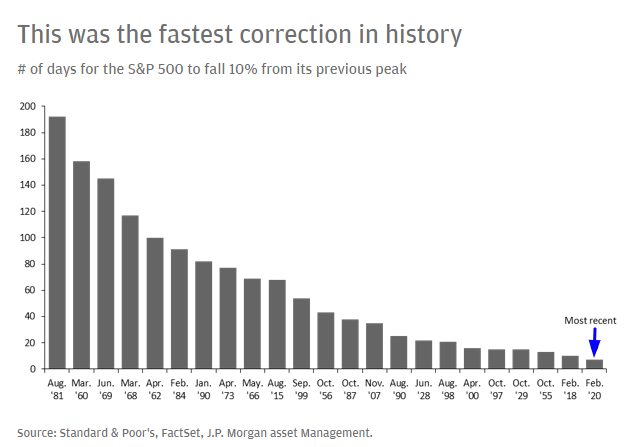
Daily swings with double-digit percentile moves became the norm, and a day when the market moved 2% to 3% felt like an “unchanged” day.
Why is this happening? Things are shutting down, and there’s fear about the consequences. People can’t work, even if they want to be out and about. As a result, incomes fall, and businesses can’t earn much either. With lower future earnings, stock prices understandably fall in sympathy. Uncertainty in general can cause fear, which can cause selling.
Cash needs: Plus, people and organizations may anticipate (or already have) a need for cash, so they sell financial assets to generate it. That’s, in part, why even some decent-quality bonds lost value (at least temporarily) during the selloff. When you need to generate cash, you might sell whatever is down the least.

What Else Is Going On?
In response, we’ve seen a wide variety of relief programs, from landlords telling tenants it’s okay to skip rent payments to the U.S. government providing historic amounts of stimulus.
Relief efforts: These efforts will undoubtedly have consequences, some of them unintended. Also, the unfortunate reality is that some people will benefit from all of this more than others—perhaps in ways that are downright unfair, if not criminal. But for better or worse, officials decided that speedy relief was more important than precise relief, and that was possibly the best way to get money into the hands of displaced workers this month.
The relief efforts will undoubtedly help the economy, but only time will tell exactly what that means.
Probable recession: The old saying goes something like this: “When your neighbor loses their job, it’s a recession. When you lose your job, it’s a depression.” Whether we’re formally in recession or not doesn’t matter—some form of slowdown seems inevitable.
The good news for investors is that sometimes markets can recover before the economy does. In the chart above, you see grey bars indicating recessionary periods. In some cases, the market (the dark wiggly line) starts heading up before the recession technically ends. That’s because markets look forward, and sometimes the market anticipates events.
The stock market is not the economy.
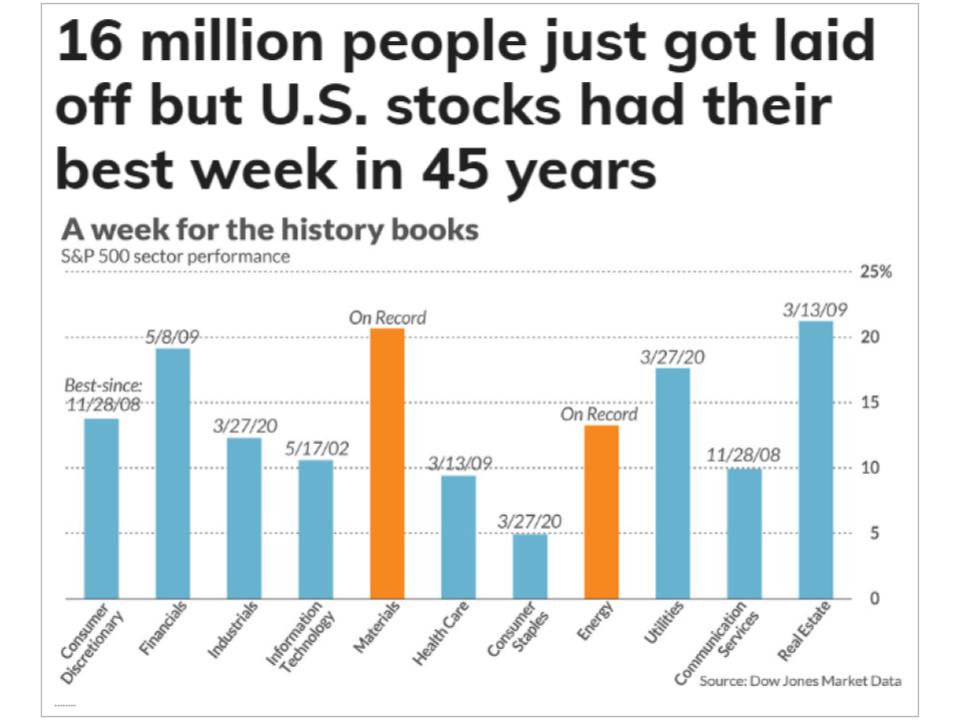
Pent-up demand: In addition to government relief, there’s pent-up demand that may help get the economy on-track after the health scare subsides. You’ve probably had to cancel events, and you might enjoy going somewhere for a vacation or a visit with loved ones once it’s safe to do so. You may have put off major purchases like replacing a vehicle. At some point, those activities will resume, possibly with a backlog of demand.
Has This Happened Before?
We’re in uncharted territory. But this isn’t the first time we’ve been somewhere new. Every unprecedented event brings the same four words: “This time is different,” and that’s always true.
The past doesn’t necessarily repeat, but sometimes it rhymes.
We’ve been through some really scary events before—horrible events causing widespread human suffering in addition to financial distress. If you need help imagining this, think of families being evicted during the mortgage crisis or the events of 9/11. Acknowledging the significant scars that those events left us with, which cannot be disregarded, the scope of this guide is about your finances. Financial markets eventually recovered, although it took time.
How much time should you expect for the coronavirus recovery? Nobody knows. It could last an uncomfortably long time, it could be a few years, or we could see a surprisingly quick V-shaped (or U-shaped) recovery. Be skeptical of anybody predicting the future with any certainty.
What we see in past data is that some of those events saw some moves toward recovery after three to five years. Granted, it’s different this time, and record unemployment will be something to contend with.

(Past performance does not guarantee future results. You already know that, but you can’t hear it too often.)
What Should You Do Now?
So, what do you do now? That might be a short-term and a long-term question, and it may apply to several areas in your financial life.
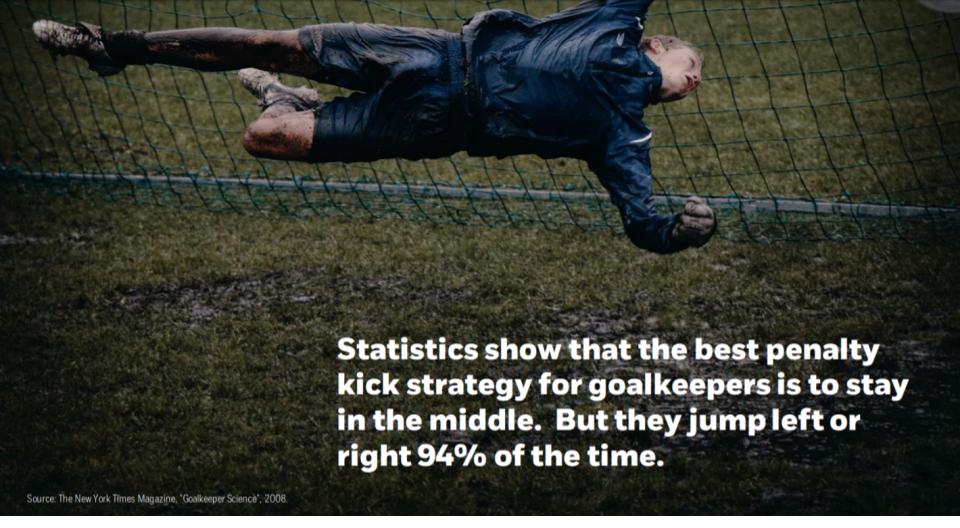
Do you feel like you just need to do something?
 In a situation like a fire, it makes sense to say “Don’t just stand there—do something!” But that’s not always the best advice in a financial crisis.
Short-Term
Tactical tips? At the end of this guide, we’ll go over a few potential opportunities and tricks to improve your finances, but for right now, we’ll focus on investments.
Were you ready for this? If not, that’s okay. But ideally, you’ve prepared yourself for this (without knowing exactly what this “this” would be when you were doing it). With emergency savings and a well-designed portfolio that accounts for inevitable panics and crashes, things might not be as bad for you as they could have been.
But this may have caught you by surprise, or you may have discovered that you don’t have the appetite for risk that you had in times past. If that’s the case, what now?
Not black-or-white: If you absolutely feel like you need to “do something” remember that you don’t have to go all-or-none. You can reduce risk by reducing exposure to stocks and risky bonds, or you can go 100% to cash, or somewhere in between. Don’t think the only option is to go to the sidelines.
Now or later? Timing things perfectly is always impossible. That said, sometimes the middle of a crisis isn’t the ideal time to reduce risk. Of course, markets could go lower, but they might not. Weigh those questions along with pros and cons as you decide. What do you stand to gain, and what do you stand to lose? Are there ways to minimize damage while making changes? Do you need cash now or in the next 12-36 months?
Going to cash is tricky. Once you’re there, it’s surprisingly hard to buy back in. You may find yourself hoping the market falls more, and unhappy if markets rise—which is kind of what you wanted in the first place! Watching the market go up can be like watching a missed train leave the station. There’s never a “green light” telling you it’s okay to get back into the markets.
Is it time to buy? If you’re seeing this as a buying opportunity, you could possibly be right. But things might not work out as you expect. Are you okay with markets falling more after you buy, because that’s a real possibility? As long as you’re not trying to pick the bottom, it’s true that things are less expensive than they were in 2019, but the world is also a different place for the companies you’re investing in. If there’s a recovery (I believe there will be one—someday), it could be several years out, or more.
If you have spare cash and want to buy, you can always buy over time, with a monthly automated purchase. That eliminates any emotional buying or hesitating.
We may see several potential outcomes, including, but not limited to:
- Fall, stall, and recovery
- Fall, slide, and recovery
To paraphrase the economist John Maynard Keynes, we might say “The markets can stay low longer than you can stay solvent.” His original quote: “Markets can remain irrational for longer than you can remain solvent.” Even if you’re right that a comeback is due (and coming someday), it might be slower than you think—or need.
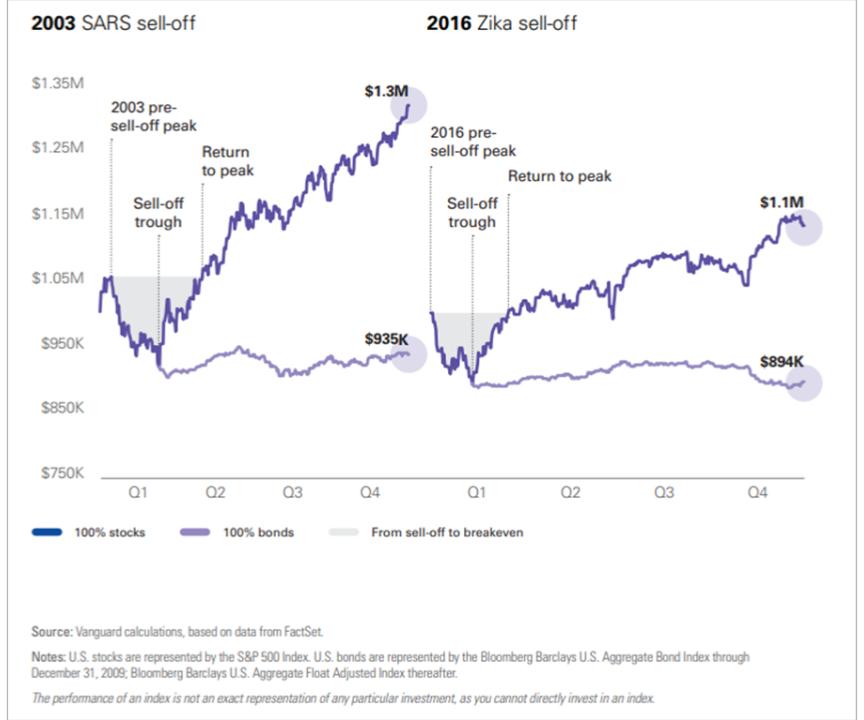
Note that there may be several “head fakes,” as in the health scares shown above.
Longer-Term
For long-term investors, the answer is fairly straightforward: Not much has changed. I know that’s not what you want to hear, but these things happen regularly. We go through panics and the markets crash, and that’s the price you pay if you want to pursue higher long-term returns.
Fundamentals: A good way to go about long-term investing is to pick the right level of risk and avoid putting your eggs in one basket. In other words use a diversified portfolio that matches your goals.
- A risk tolerance questionnaire you “take your temperature” and understand how much risk might be appropriate. ApproachFP.com has a good one that’s designed by financial psychologists, so it covers a bit more than typical surveys, and it only takes about six minutes to complete.
Mix it up: Picking the best type of investment is not easy, and it might be better to spread your savings across numerous types of investments. This busy chart below shows each year from left to right, and the best performing investment for that year from top to bottom. This chart is such a mess that it’s not useful for making predictions—and that’s the point.
But notice the light grey boxes connected by the black line (“Asset Allocation”)? That shows a diversified mix of investments that owns all the other colors in the chart. It’s never the best, and never the worst, and it might be appropriate to help you reach your most important long-term goals.

How to Prepare For the Next Crash
The best way to prepare for the next crash is to pick the right risk level and build a portfolio that spreads your assets among numerous investments. I know that’s not what you want to hear, but I sincerely believe that is the best path forward.
Planning to spend? If you will need cash for spending in the near- to medium-term, consider using a “bucketing” strategy to set aside the cash you need. That way, you don’t need to worry what the markets do. For example, as you go into retirement, you can set aside two to five years’ worth of cash (just make sure you’re earning some interest—or something—on that money). You can use a CD ladder or other strategies with this approach. Alternatively, you can focus on high-quality short-term bonds.
As time passes, you spend the money and replenish what you’re spending from longer-term investments.
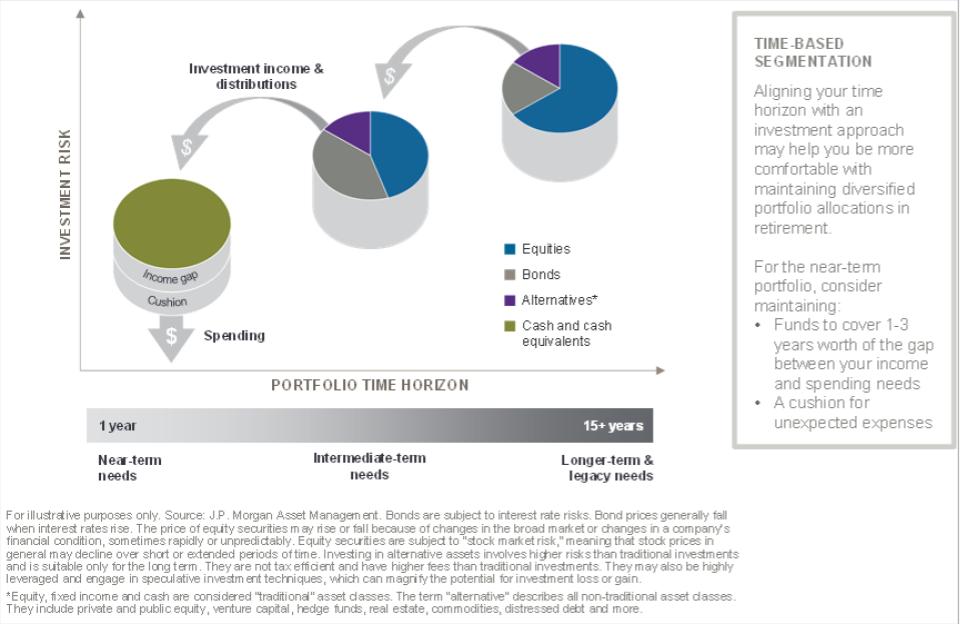
Important: Bucketing tends to lead to cash-heavy holdings that lag in rising markets—but can provide safety in falling markets.
Tactical Tips For Right Now
Wondering if you can make some lemonade out of all of this? Many of these strategies assume that this is temporary and the markets will recover someday. However, keep in mind that there’s no guarantee of recovery, and if there is one, it could take longer than you think. Of course, markets could still move lower, and we can’t time these things perfectly.
Tax-loss harvesting: If you’ve suffered investment losses in taxable accounts, it may be possible to realize tax losses that reduce your tax burden this year. Be sure to avoid wash sale problems, and review the strategy with your CPA. I have been harvesting losses in clients’ taxable accounts during this event.
Roth conversions: Another tax-related idea is to convert pre-tax assets to Roth while they’re at reduced prices. That requires paying taxes this year, which can lead to several unintended consequences. Again, review with your CPA before you decide on anything.
Fund retirement accounts: If you typically fund your HSA or IRAs throughout the year, it could make sense to accelerate that process. Be wary of contributing to a 401(k) with an employer match too quickly—you want to make sure you’ll qualify for the full match, and sometimes, maxing out too early in the year works against you. Ask your employer how they calculate the match.
Skip your RMD? If you’re receiving required minimum distributions from a retirement account, you might be allowed to skip those distributions during the crisis. Doing so allows you to keep your funds set aside and potentially avoid taxation. Can’t say it too much: Talk to your CPA about this if you like the sound of it.
Refinance home loans? If you have outstanding debt on your home, it could make sense to refinance while rates are low. But make sure you really come out ahead and don’t waste money on closing costs (or spend more on interest over the life of your loan). Amortization calculations can help you here. Also, check to see if you give up any benefits by refinancing (borrower-friendly features of your loan, or switching to recourse debt, as just two examples).
Keep contributing: Don’t need to spend your money in the near future? That’s great. If you’ve been adding to retirement accounts and things like health savings accounts (HSAs), it may be wise to keep those contributions going. Continuing with your plan, assuming it accounted for these inevitable events, allows you to buy more while things are low. That said, if you don’t have emergency savings or you see other immediate needs on the horizon, that might be a reason to pause contributions.
Rebalance: Review your investments to see if they’re still at the level of risk you want. Some investments may have gained value, while others lost. Does it make sense to take some profits from winners and reinvest into distressed areas of your portfolio? When markets swing wildly, it’s easy to overdo this, but there may be opportunities. Again, I’ve been monitoring and adjusting accounts for investment management clients.
How Long Until This Is Over?
Nobody can know when life returns to normal. It depends primarily on the virus, and only when that’s under control can things begin to repair themselves. Based on the first-quarter loss of 21%, the table below shows what return might be required to regain the highs over specific time periods. This doesn’t predict what will happen, but it shows what would need to happen in that example.
For example, if you assume that we’ll recover in six years, that would equate to average annual returns of about 6% per year.
The Bottom Line
We’ve been through a lot, and unfortunately, it’s not all behind us (this includes “general” life challenges—like less time with loved ones, reduced travel, etc.—not just financial challenges, although markets could continue to bounce around). But assuming we’re using a portfolio that was designed with your long-term goals in mind, these events probably won’t ruin you, and they might not have any adverse long-term effects for you.
It’s a difficult time to be an investor, but there’s also room for optimism.
Important Information and Disclosures
Chart sources: JP Morgan, Dimensional Funds, and Vanguard, used with permission
Past performance is not a guarantee of future results. Indices are not available for direct investment. Index performance does not reflect the expenses associated with the management of an actual portfolio. It is possible to lose money when investing in financial markets.
Tax rules are complicated and they change from time to time. Review your specifics with a CPA before making any decisions.
Please see additional important disclosures available from the bottom of this page.